


Another Lake Havasu City summer is finally starting to loosen its grip.
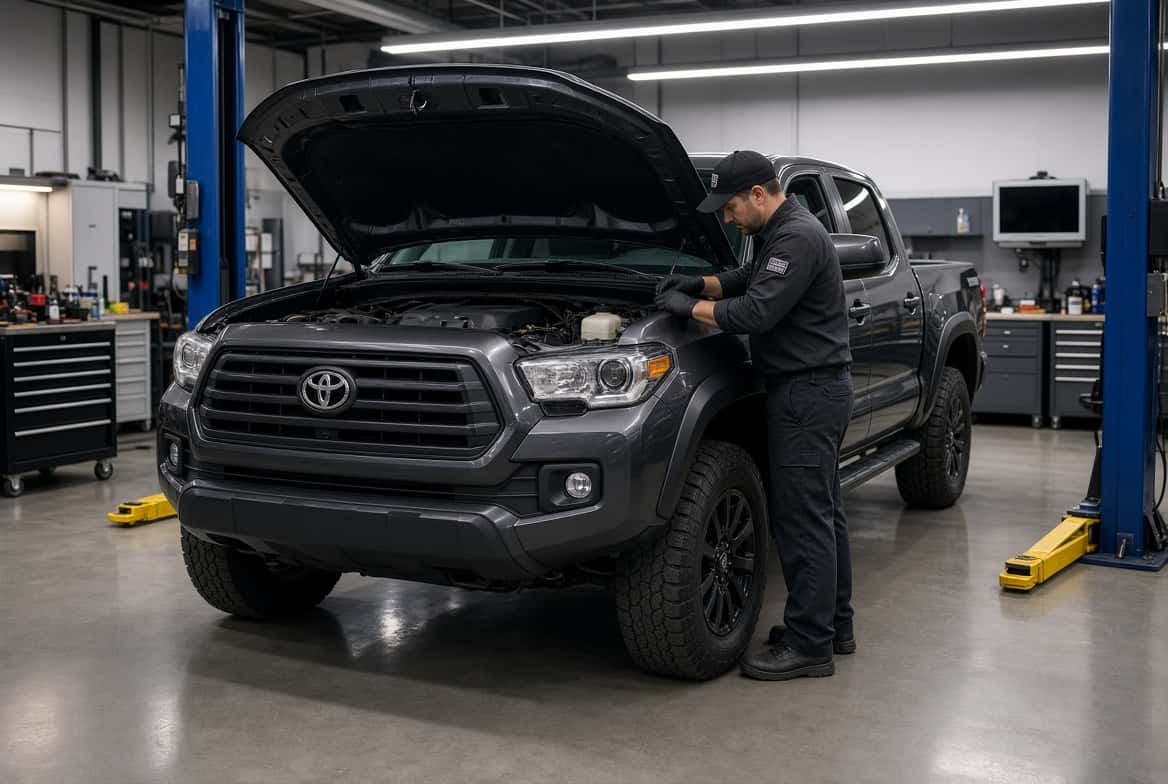
The afternoons are getting a little easier.
Mornings are becoming more comfortable.
Long highway drives sound a lot more appealing.
And after months of extreme heat, scorching pavement, dust, road trips, river weekends, towing, and nonstop air-conditioning, your Toyota probably appreciates the change just as much as you do.
But cooler weather doesn’t erase what your vehicle just went through.
Fall is a great time to take stock of your Toyota after another demanding Western Arizona summer.
Think of it as a post-summer reset.
What Does a Post-Summer Toyota Check Include?
Not every Toyota needs exactly the same maintenance.
A Tacoma that spent the summer towing recreation equipment has had a very different few months than a Corolla making daily trips around Lake Havasu City.
A Highlander packed with passengers and luggage has different demands than a Prius commuting around town.
And a Toyota bZ doesn’t have the same maintenance needs as a gasoline-powered Camry or Tundra.
That’s why the factory maintenance schedule for your specific model, model year, mileage, and equipment matters.
After a Western Arizona summer, areas worth reviewing may include:
- Tire pressure and tread condition
- 12-volt battery condition
- Engine oil and applicable fluids
- Brake condition
- Cooling-system components
- Belts and hoses where applicable
- Wiper blades
- Exterior lighting
- Engine and cabin air filters where applicable
- Heating, A/C, and windshield defrost operation
- Additional maintenance after towing or heavy-duty use
Your Toyota may not need service in every category.
The point is knowing where everything stands before the next road trip, holiday drive, cooler morning, or weekend out of town.
Start With Your Toyota’s Factory Maintenance Schedule
One of the easiest mistakes to make with vehicle maintenance is assuming one mileage interval applies to everything.
It doesn’t.
Toyota maintenance requirements can vary based on:
- Model
- Model year
- Powertrain
- Mileage
- Drivetrain
- Driving conditions
- Towing or heavy-load use
- Previous maintenance
Many Toyota vehicles have regular maintenance checkpoints around every 5,000 miles or six months, but the actual services performed at those visits depend on the vehicle and its maintenance schedule.
A tire rotation may be due at one visit.
An oil and filter change may be due at another.
Other mileage points can involve additional inspections, filters, fluids, or drivetrain-related maintenance.
Instead of relying on an old one-size-fits-all rule, follow the maintenance information for your specific Toyota.
If you’re not sure what’s due, Anderson Toyota can help review your model, mileage, and service history.
Your 12-Volt Battery Just Survived Another Havasu Summer
People tend to associate dead batteries with freezing winter mornings.
Lake Havasu City gives batteries a different kind of challenge.
Heat.
Lots of it.
High temperatures can be tough on a 12-volt battery, and a battery that has weakened during summer may not make itself obvious until conditions change.
Watch for:
- Slower-than-normal engine cranking
- Clicking when attempting to start
- Dim or inconsistent lighting
- Electrical systems behaving differently
- Corrosion around battery terminals
- Battery or charging-system warnings
If you’re uncertain about battery condition after summer, testing it can remove a lot of guesswork.
That’s particularly helpful before a fall or winter trip takes you away from the Colorado River and into substantially colder temperatures.
Hybrid Owners Shouldn’t Ignore the 12-Volt Battery Either
Toyota hybrids get plenty of attention for their high-voltage hybrid battery systems.
But they also use a separate low-voltage electrical system.
That means hybrid ownership doesn’t make basic battery awareness disappear.
If you drive a Prius, Corolla Hybrid, Camry, Crown, RAV4 Hybrid, Highlander Hybrid, or another Toyota hybrid, follow the maintenance and inspection information for your particular model just as you would with a conventional gasoline vehicle.
The powertrain may be different.
The need to stay on top of maintenance isn’t.
Cooler Mornings Can Change Your Tire Pressure
After months of triple-digit heat, the first genuinely cooler Lake Havasu mornings feel pretty good.
Your tires notice the temperature change too.
As outside temperature decreases, tire pressure can decrease with it.
Check your tires when they’re cold and inflate them according to the pressure specified for your particular Toyota, normally listed on the tire-information label inside the driver’s door area.
Then look at the tires themselves.
Check for:
- Uneven tread wear
- Low tread depth
- Cracking
- Bulges
- Cuts or visible damage
- Embedded objects
Highway 95 miles, summer pavement temperatures, construction, desert roads, towing, and long-distance travel can all add wear.
Fall is a good time to find out how your tires actually came through the season.
Did Your Tacoma or Tundra Work Hard All Summer?
For plenty of Toyota truck owners around Lake Havasu City, summer isn’t just commuting season.
It’s towing season.
It’s hauling season.
It’s boat season.
It’s camping season.
It’s side-by-side, trailer, project, and weekend-adventure season.
If your Tacoma or Tundra spent the summer towing when properly equipped, carrying heavier loads, traveling dirt roads, or making frequent highway trips, fall is a smart time to give the truck some attention.
Depending on the truck, powertrain, drivetrain, mileage, and how it was used, that may mean reviewing:
- Engine oil and scheduled maintenance
- Brake condition
- Tires
- Cooling-system condition
- Transmission and driveline maintenance requirements
- Suspension components
- Trailer connections and related equipment
Different Tacoma and Tundra configurations can have different maintenance requirements, so use the schedule for your specific truck rather than assuming every Toyota pickup needs identical service.
Your Toyota SUV May Have Had a Busy Summer Too
Trucks aren’t the only vehicles that work hard around here.
A 4Runner, Sequoia, Grand Highlander, or Highlander may have spent summer carrying passengers, luggage, camping equipment, or recreational gear.
A RAV4 or Corolla Cross may have covered thousands of miles commuting, running errands, and taking road trips through Arizona heat.
Even if your Toyota never pulled a trailer or left the pavement, months of normal summer driving can still add plenty of mileage and wear.
Fall gives you a convenient checkpoint before holiday travel gets underway.
Check the Cooling System After Months of Extreme Heat
Your Toyota’s cooling system has just worked through one of the most demanding parts of its year.
Fall temperatures may finally be improving, but that doesn’t mean it’s time to forget about the cooling system until next June.
Pay attention to:
- Temperature or coolant warnings
- Temperature readings that appear unusual
- Visible leaks
- Sweet or unusual odors
- Signs of damaged or deteriorating hoses where applicable
Never open a hot or pressurized cooling system.
If your Toyota has shown signs of overheating, coolant loss, or unusual temperature behavior, have it inspected safely.
Your A/C Isn’t Done Yet
Calling it “fall” doesn’t turn off the Arizona sun.
Lake Havasu City can still have plenty of warm afternoons when the air conditioning is very much part of everyday driving.
At the same time, drive toward Kingman, Prescott, Williams, Flagstaff, or another higher-elevation destination and suddenly the heater and windshield defroster become important again.
That makes fall a great time to check the entire climate-control system.
Pay attention to:
- Weak airflow
- A/C that isn’t cooling normally
- Heat that doesn’t arrive as expected
- Unusual odors from the vents
- Poor windshield defrosting
You might need cold air in Lake Havasu City and heat later that same day somewhere else in Arizona.
That’s why both sides of the system matter.
Wipers Work Hard Even When It Doesn’t Rain Much
Wiper blades are easy to ignore during long stretches of dry weather.
But they still spend the entire summer sitting against extremely hot glass while absorbing Arizona sunlight.
Heat and UV exposure can age rubber even when the blades aren’t being used very often.
Inspect them if they:
- Streak
- Skip
- Chatter
- Leave portions of the windshield uncleared
- Show visible cracking or deterioration
While you’re there, check the washer-fluid level and inspect the windshield for chips or damage.
You don’t want the first real test of your wipers to happen halfway through a fall road trip.
Shorter Days Mean More Driving After Dark
Fall doesn’t just bring cooler temperatures.
It also brings shorter days.
That means more evening drives along Highway 95, toward Parker, up toward Bullhead City, east toward Kingman, or through darker sections of Western Arizona.
Take a few minutes to check:
- Headlights
- High beams
- Brake lights
- Taillights
- Turn signals
- Hazard lights
- License-plate lights
Exterior lighting matters everywhere.
It becomes even more important once you’re outside developed areas on a dark Arizona highway.
Give Your Brakes a Post-Summer Listen
Summer travel, highway miles, towing, stop-and-go traffic, mountain routes, and normal everyday driving can all add work for your brakes.
Fall is a good time to pay attention to anything that sounds or feels different.
Possible warning signs include:
- Squeaking or grinding
- Vibration during braking
- A different brake-pedal feel
- Pulling while braking
- Longer stopping response
- Brake or ABS warning lights
If something has changed, having the brakes inspected sooner is generally better than waiting for the symptom to become more obvious.
Desert Dust Isn’t Taking Fall Off
The temperature can improve.
The dust is still here.
After months of wind, desert roads, recreation, construction, and normal Western Arizona driving, engine and cabin air filters may have collected plenty of debris.
On applicable gasoline and hybrid vehicles, the engine air filter helps keep contaminants out of intake air entering the engine.
The cabin air filter helps filter air entering the passenger compartment through the climate-control system.
Inspection and replacement requirements vary by model and operating conditions, so follow the maintenance information for your specific Toyota.
What About a Toyota EV?
Battery-electric Toyotas have different maintenance requirements than gasoline-powered vehicles.
A Toyota EV doesn’t need engine-oil changes because it doesn’t have a gasoline engine.
But that doesn’t mean maintenance disappears.
EV drivers still need to pay attention to items such as:
- Tire pressure and tread
- Tire rotations
- Brake components
- 12-volt electrical-system condition
- Wipers and washer fluid
- Cabin air filtration
- Climate-control operation
- Other inspections specified for the particular vehicle
The rule is simple:
Follow the maintenance schedule for the Toyota you actually drive.
Don’t apply gasoline-vehicle maintenance advice to an EV—or assume a hybrid follows exactly the same routine as every conventional model.
Lake Havasu City Fall Is Road-Trip Season
One of the best things about fall around the Colorado River is that getting in the car and going somewhere starts sounding like fun again.
From Lake Havasu City, you might be heading:
- South toward Parker
- North toward Bullhead City or Laughlin
- East toward Kingman
- North toward Las Vegas
- Toward Prescott, Williams, Flagstaff, or other higher-elevation destinations
- West toward Needles and California
And the weather at the other end of the trip may look nothing like what you left behind.
Before a longer fall drive, consider checking:
- Tires
- 12-volt battery
- Factory maintenance status
- Engine oil on applicable models
- Applicable fluids
- Brakes
- Wipers
- Exterior lighting
- Heating and windshield defrost
- Spare tire or tire-repair equipment, if equipped
And check the weather where you’re actually going—not just the forecast outside your house in Lake Havasu City.
Your Lake Havasu City Toyota Post-Summer Checklist
Here’s the quick version:
- ✓ Check tire pressure and tread
- ✓ Test the 12-volt battery
- ✓ Review the maintenance schedule for your specific Toyota
- ✓ Check engine oil and applicable fluids on applicable vehicles
- ✓ Inspect cooling-system condition
- ✓ Listen and feel for brake changes
- ✓ Check wipers and washer fluid
- ✓ Test exterior lighting
- ✓ Test A/C, heat, and defrost
- ✓ Review air-filter condition where applicable
- ✓ Review additional maintenance after towing or heavy summer use
Why Post-Summer Maintenance Matters in Lake Havasu City
A fall vehicle check around the Colorado River isn’t primarily about preparing for months of snow.
It’s about recovering from months of extreme desert heat while preparing for more varied driving conditions.
Your Toyota can leave a warm Lake Havasu City afternoon and encounter dramatically cooler conditions after a relatively short drive into higher elevations.
A Tacoma or Tundra that spent the summer towing may transition into holiday-road-trip duty.
A 4Runner, Highlander, Grand Highlander, or Sequoia that spent months carrying family and recreation gear may soon head into colder parts of Arizona.
A Camry, Corolla, Prius, RAV4, or Corolla Cross that spent the summer commuting through heat may simply benefit from having its tires, battery, brakes, fluids, filters, lights, and climate-control system checked.
That makes fall a natural reset point.
Toyota Service at Anderson Toyota in Lake Havasu City
At Anderson Toyota in Lake Havasu City, Arizona, Toyota-trained technicians can help with routine maintenance and repair needs for your Toyota.
Current services available through Anderson Toyota include:
- Factory-scheduled Toyota maintenance
- Oil and filter service
- Tire rotations and tire service
- Wheel alignments
- Battery testing and replacement
- Brake inspection and repair
- Vehicle inspections
- Diagnostic and repair work
Anderson Toyota’s service center uses Genuine Toyota parts for applicable Toyota service and repair work.
The dealership is located at 6510 Showplace Avenue in Lake Havasu City, AZ 86404, conveniently serving Toyota owners from Lake Havasu City, Parker, Bullhead City, Kingman, Needles, Fort Mohave, Mohave Valley, and communities throughout Western Arizona and the Colorado River region.
Your Toyota Made It Through Another Havasu Summer. Give It a Reset.
Lake Havasu City summers ask a lot from a vehicle.
Fall is your opportunity to find out how everything handled it.
Before your next road trip, towing weekend, holiday drive, family visit, daily commute, or escape into cooler weather, take a little time to check the things that matter.
Tires.
Battery.
Brakes.
Fluids.
Lights.
Wipers.
Filters.
Climate control.
And the factory maintenance requirements for your specific Toyota.
Your vehicle may not need much.
But it’s better to know that before you leave Lake Havasu City than find out halfway to wherever you’re headed.
After another Western Arizona summer, your Toyota has earned a little attention.
-TJ
More from Anderson Toyota
2027 Toyota Corolla Review: Efficient, Smart, and Built for Everyday Life
The Toyota Corolla was introduced to the world in 1966, beginning a story that would eventually make the name familiar to generations of drivers around the globe. For 2027, Toyota is celebrating six decades of Corolla. But the newest Corolla isn’t surviving on history. The 2027 Toyota Corolla arrives with gas and hybrid powertrains, excellent…
2027 Toyota Prius Review: MPG, AWD, Trims & Features Explained
The 2027 Toyota Prius proves that outstanding fuel economy does not have to come at the expense of style, technology, or everyday performance. Toyota’s latest Prius combines its fifth-generation hybrid system with a sleek hatchback design, nearly 200 horsepower, available all-wheel drive, modern technology, and fuel economy that can reach an EPA-estimated 55 mpg combined….
0 comment(s) so far on Another Lake Havasu City summer is finally starting to loosen its grip.